
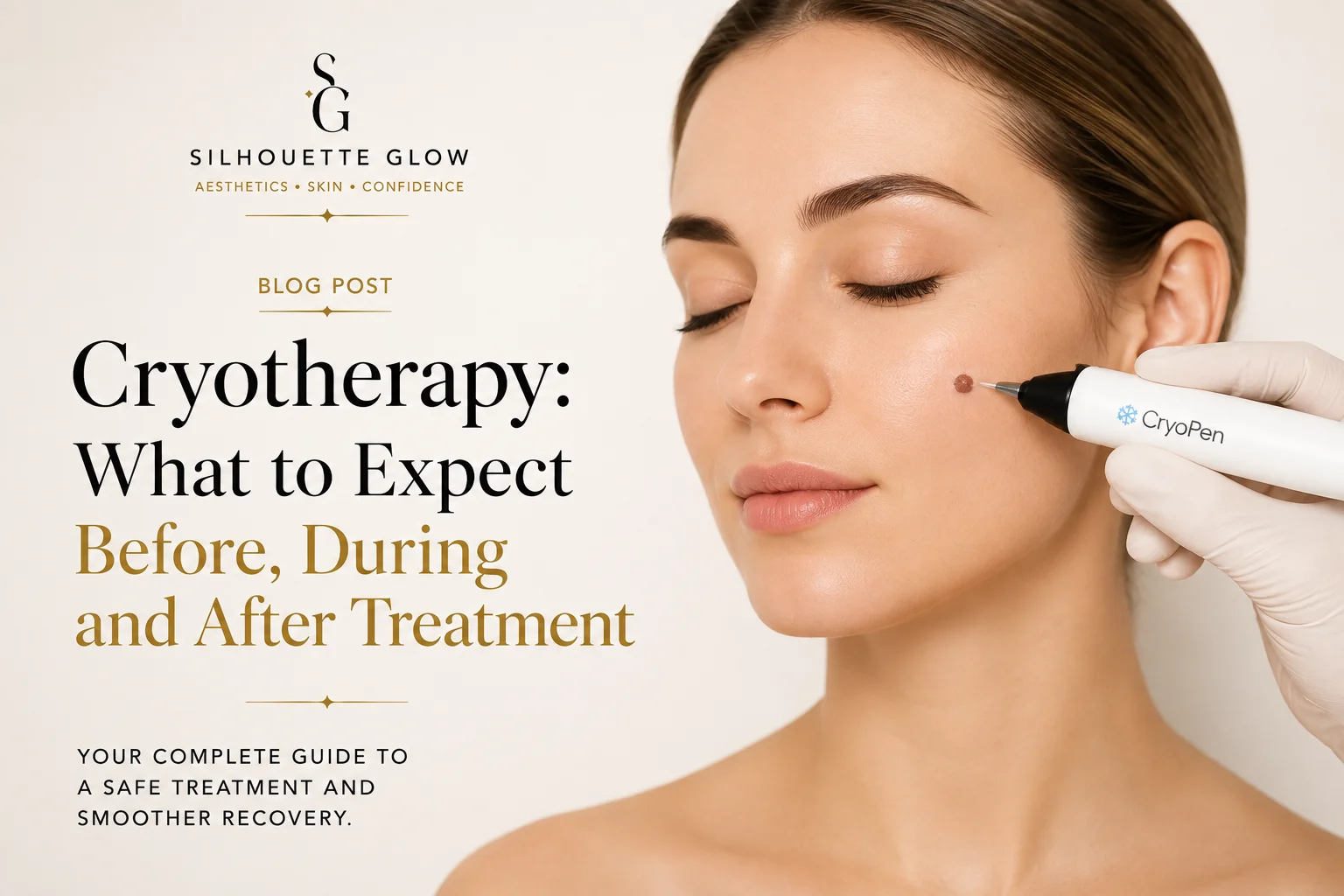
If you are considering Cryotherapy to treat a skin tag, wart, verruca, cherry angioma or certain age and sun spots, knowing what happens afterwards can make the experience much less uncertain.
Cryotherapy aftercare is not complicated, but the treated area needs time to heal.
At Silhouette Glow in Richhill, County Armagh, CryoPen treatments are carried out by Vaida, a Registered Nurse with 19 years of medical experience. Every treatment begins with an assessment and includes guidance on caring for the treated area afterwards.
This guide explains what you may notice after treatment, what is generally considered part of the healing process, and when you should ask for further medical advice.
What happens to your skin after Cryotherapy?
Cryotherapy uses controlled cold to treat the targeted area.
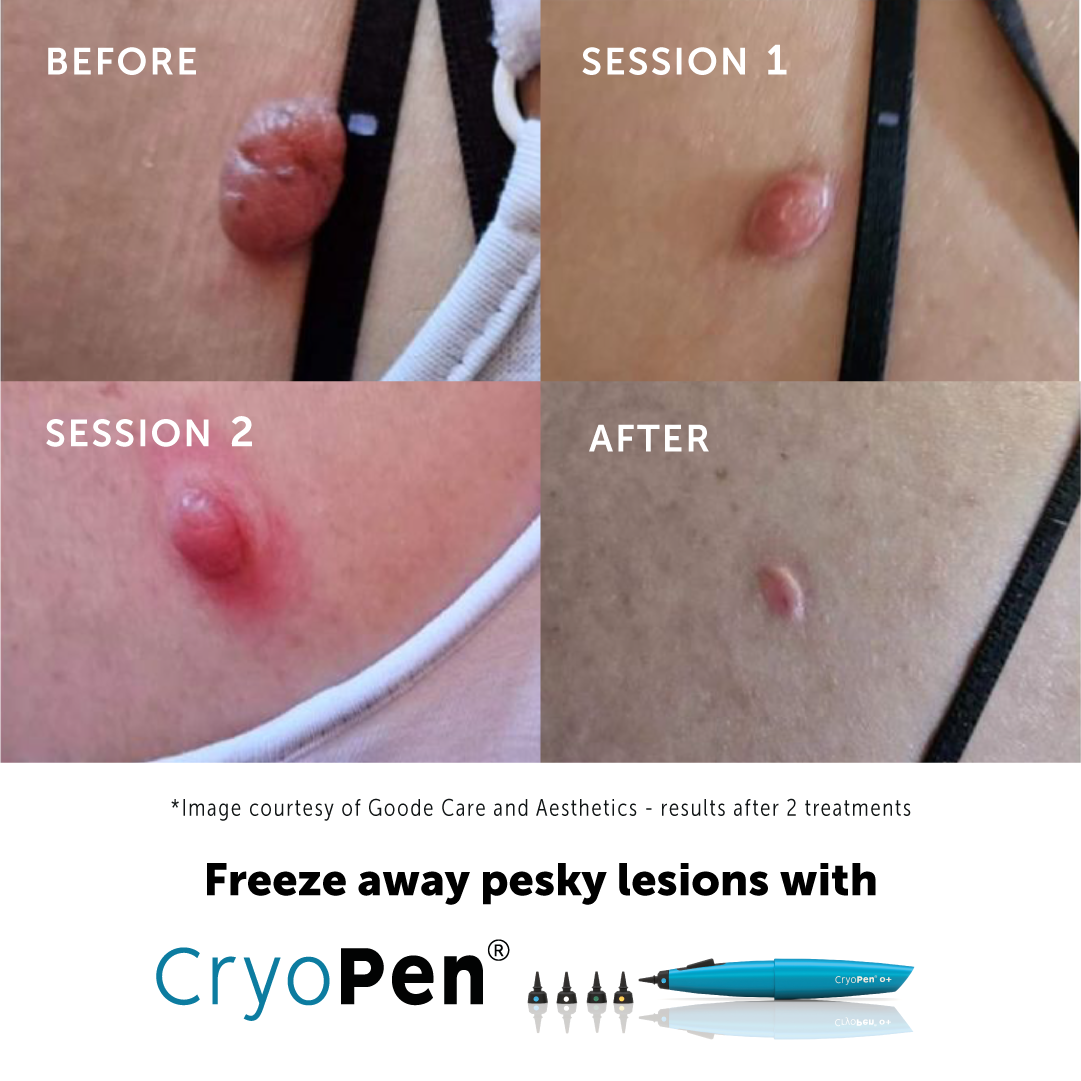
After treatment, the skin may become red, swollen, tender or sensitive. A blister can also develop, followed by a crust as the area heals.
These reactions can look more dramatic than you might expect, but they can be part of the normal response to cryotherapy. NHS patient information describes redness, swelling, blistering and crusting as possible effects following treatment.
The reaction will vary depending on the area treated, the lesion being treated and your individual skin response.
Cryotherapy aftercare: what should you do?
The most important part of Cryotherapy aftercare is simple:
Leave the treated area alone while it heals.
Your practitioner will give you specific instructions for your treatment, but general aftercare includes keeping the area clean and avoiding unnecessary rubbing, scratching or picking.
If a blister or crust develops, do not deliberately break, peel or remove it. Allow the skin to heal naturally unless your healthcare professional has advised otherwise.
This matters because disturbing healing skin can cause unnecessary irritation and may increase the risk of complications.
Can Cryotherapy cause a blister?
Yes.
A blister can form after Cryotherapy, depending on the treatment and how your skin responds.
It may contain clear fluid or, occasionally, blood. Although seeing a blister can be concerning, blistering is a recognised response following cryotherapy.
If you develop a blister, follow the aftercare instructions provided by your practitioner.
Do not automatically assume that a blister means something has gone wrong.
What happens when the treated area forms a crust?
As the skin heals, a crust or scab may develop.
This is one of the stages many clients notice after treatment.
It can be tempting to pick at it, especially if the area catches on clothing or feels slightly uncomfortable.
Don’t pick it.
Allowing the crust to come away naturally gives the underlying skin time to repair.
If you are unsure whether the area is healing normally, contact your practitioner rather than trying to remove the crust yourself.
How long does Cryotherapy take to heal?
There is no single healing time that applies to everyone.
The location, size and type of lesion, the treatment used and your own skin response can all affect recovery.
NHS dermatology information notes that healing after cryotherapy can take around two to three weeks in some cases, although individual healing times vary.
For this reason, it is better to think in terms of a healing process, rather than expecting the skin to look completely settled after a fixed number of days.
Will the area look different while it heals?
It can.
The treated area may initially look red or swollen. A blister or crust may then develop before the skin gradually settles.
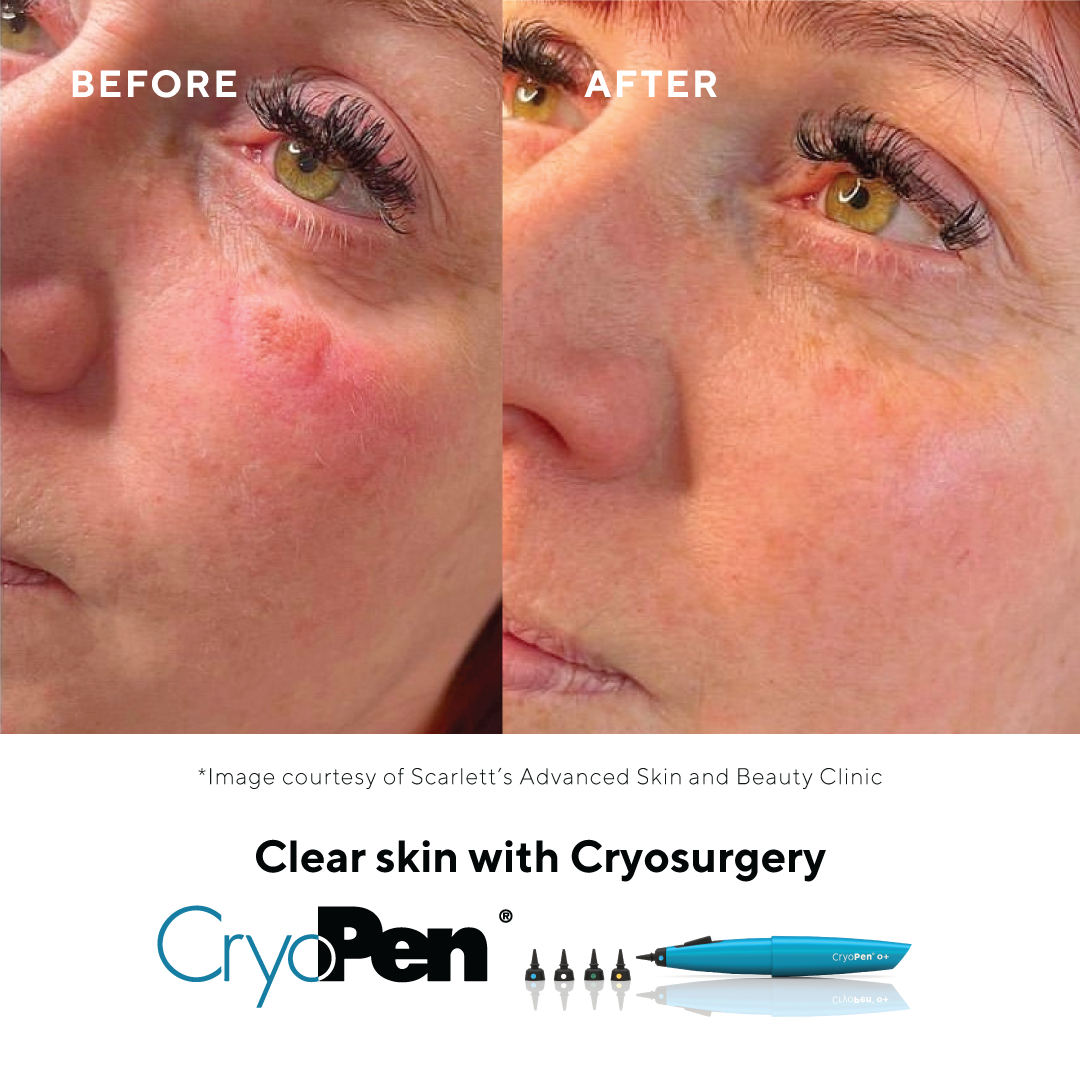
Temporary changes in pigmentation can also occur following cryotherapy. The final appearance should not be judged immediately after treatment because the skin needs time to recover.
If pigmentation or scarring is a concern for you, discuss this with your practitioner before treatment.
Can I touch or wash the treated area?
Your practitioner will give you specific instructions based on the treatment and location.
In general, gentle hygiene is important while the skin heals. Avoid unnecessary rubbing or picking.
Do not apply random home remedies, acids or other strong products to the treated area unless your practitioner has specifically recommended them.
More products do not necessarily mean better aftercare.
Keeping the routine simple is often the safest approach while the skin is recovering.
Can I wear makeup after Cryotherapy?
If the treated area is on the face, ask your practitioner when it is appropriate to apply makeup.
Freshly treated skin can be sensitive, and covering an area that is blistered, crusted or otherwise healing may not be appropriate.
Your practitioner can advise you based on the treatment site and how your skin looks after the procedure.
Should I use sunscreen after Cryotherapy?
Protecting healing skin from unnecessary sun exposure is important.
Ask your practitioner when sunscreen can be applied to the treated area and which product is appropriate.
Once the skin has healed sufficiently, regular broad-spectrum sunscreen can help protect the skin from UV exposure and may be particularly important if you are prone to pigmentation changes.
Does Cryotherapy require more than one treatment?
Sometimes.
The number of treatments depends on what is being treated and how it responds.
For example, Silhouette Glow explains that warts and verrucae may require multiple sessions depending on their size, depth and location.
Other lesions may respond differently.
A consultation is therefore more useful than promising that every concern will disappear after one appointment.
What can Silhouette Glow treat with Cryotherapy?
Silhouette Glow currently offers Cryotherapy for a range of common skin concerns, including:
The clinic uses CryoPen technology and provides nurse-led treatment in Richhill, County Armagh.
Whether Cryotherapy is suitable depends on the individual lesion and an appropriate assessment.
When should you get a skin lesion checked?
This is one of the most important things to understand before considering cosmetic removal.
Not every skin mark should simply be treated because it is inconvenient or unwanted.
If a lesion is new, changing, bleeding, painful or otherwise concerning, seek appropriate medical advice before considering cosmetic treatment.
A professional assessment is particularly important when you are not certain what the lesion actually is.
Cosmetic treatment should never replace proper medical assessment of a suspicious skin lesion.
Is Cryotherapy right for you?
You may have been looking at the same skin tag, red spot, wart or sun spot for months or even years.
Perhaps it catches on clothing.
Perhaps you notice it whenever you look in the mirror.
Or perhaps you simply want to know whether there is a professional treatment option.
You do not need to decide on treatment before you understand your options.
At Silhouette Glow, the first step is a professional assessment. You can discuss the concern, ask questions and find out whether Cryotherapy is an appropriate option for you.
Cryotherapy aftercare at Silhouette Glow
Good Cryotherapy aftercare starts with knowing what to expect.
A treated area can change during the healing process, and temporary redness, swelling, blistering or crusting may occur. Following your practitioner’s instructions and leaving the area undisturbed can help support normal healing.
If you are considering Cryotherapy for a skin tag, wart, verruca, cherry angioma, age spot or sun spot, Silhouette Glow provides nurse-led CryoPen treatment in Richhill, County Armagh.
Start with an assessment.
Ask your questions.
Understand the treatment.
Then decide whether it is right for you.
Frequently Asked Questions
How long does Cryotherapy aftercare last?
Healing time varies from person to person and depends on the area and lesion treated. Some treated areas may settle within a couple of weeks, while others can take longer.
Is blistering normal after Cryotherapy?
A blister can occur following cryotherapy. If you are concerned about the appearance of the treated area or think it may be infected, contact an appropriate healthcare professional.
Can I pick the scab after Cryotherapy?
No. Avoid picking or deliberately removing a crust while the area is healing.
Can Cryotherapy leave a mark?
Temporary pigmentation changes can occur after cryotherapy, and scarring is also a possible complication. Your individual risk should be discussed before treatment.
How many Cryotherapy treatments will I need?
There is no universal number. Some concerns may respond to one treatment, while others, particularly some warts and verrucae, may require several sessions.
Where can I have Cryotherapy in County Armagh?
Silhouette Glow provides nurse-led CryoPen treatment in Richhill, County Armagh, for suitable skin concerns following assessment.
We take time to assess your skin properly, explain the procedure clearly, and ensure you feel comfortable throughout the treatment. You can also read client reviews and see our latest updates through our Google Business Profile.
Book your appointment today and get expert advice on the safest treatment option for your skin concern.