
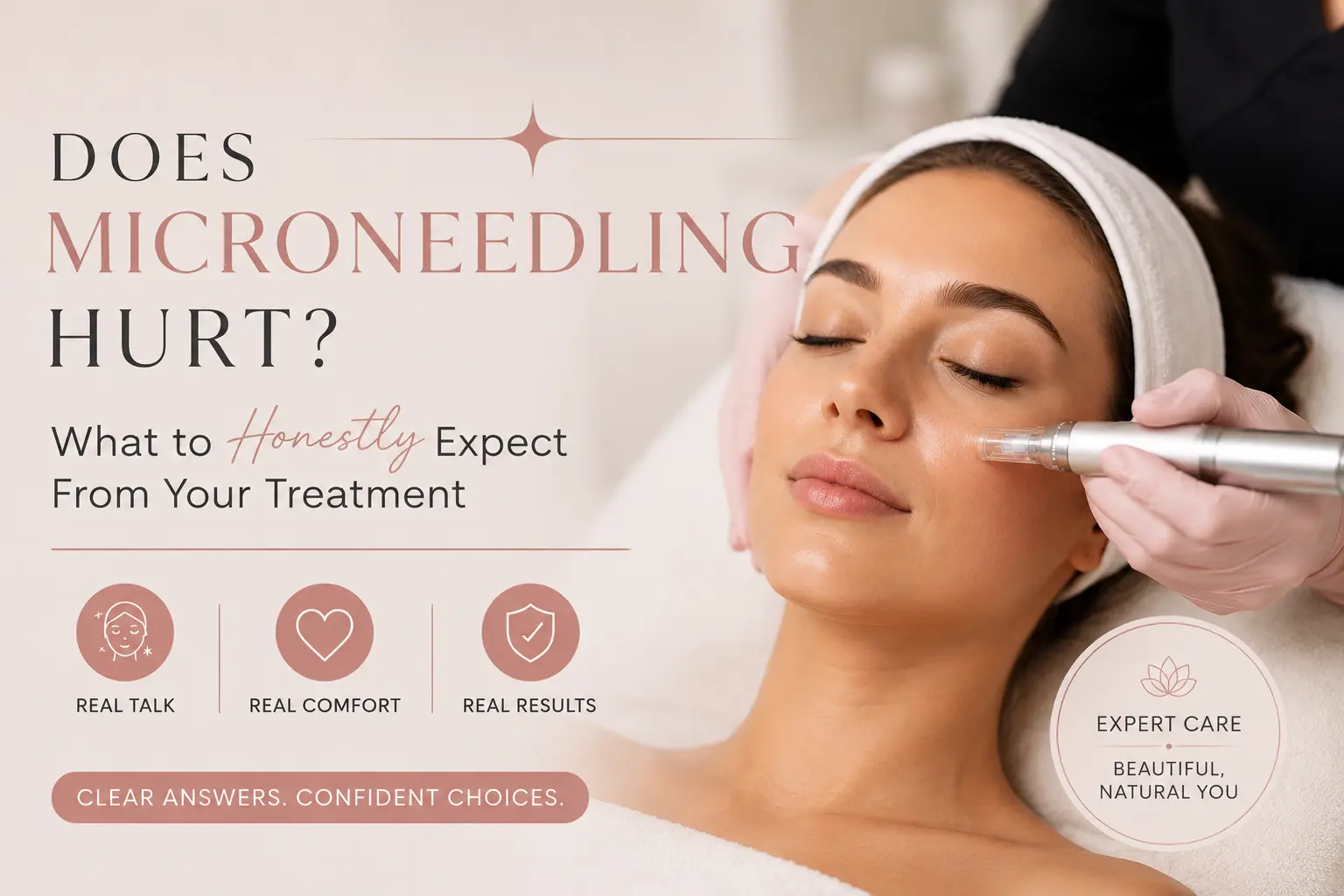
Does Microneedling Hurt? Discover what a professional, nurse-led collagen induction therapy session actually feels like and how comfort is managed.
This definitive, medically responsible guide directly addresses consumer anxiety regarding the sensations experienced during collagen induction therapy. It details the precise structural feelings associated with professional microneedling, the clinical parameters that influence comfort, and the exact methods used to protect the skin barrier while ensuring patient ease. Written from a grounded, nurse-led perspective, this article replaces fear with biological facts, reassuring readers that individual structural skin goals can be met comfortably and safely.
When researching advanced methods for achieving smoother, firmer, and healthier-looking skin, it is entirely natural to focus on consumer comfort. Among the most popular and clinically proven non-surgical treatments available today is professional microneedling. Also known within medical aesthetics as collagen induction therapy, this treatment has gained a massive following due to its ability to kickstart natural skin repair.
However, because the procedure involves using ultra-fine needles to create thousands of micro-channels in the skin, one primary question consistently dominates search engines and consultation rooms alike: does microneedling hurt?
Anxiety surrounding potential discomfort is one of the most common reasons individuals delay booking their first aesthetic procedure. Unfortunately, the internet is filled with exaggerated stories and ungrounded claims that do not reflect the reality of a modern, clinical environment.
For those considering treatments in Northern Ireland, having access to clear, honest, and medically responsible information is vital. Your skincare journey should be built on trust and clarity, not mystery. This comprehensive guide will analyze exactly what a microneedling treatment feels like, break down the biological and technical factors that influence skin comfort, and explain how a professional setting keeps you relaxed from start to finish.
The Core Question: Does Microneedling Hurt?
To answer the question directly: for the vast majority of individuals, professional microneedling does not cause significant pain. Instead, it is more accurately described as a unique, noticeable sensation that is highly manageable depending on individual circumstances.
The reason the word “hurt” is a misnomer comes down to how the sensation is processed. Unlike a medical injection or a blood draw, which involves a single, larger needle pushing deep into a specific area, microneedling utilizes a compact cluster of sterile, microscopic needles. These needles move at incredibly high speeds, making contact with the skin for only a fraction of a second.
| Typical Sensation | What It Feels Like |
|---|---|
| Device Movement | A fast, mechanical vibration |
| Skin Contact | A scratchy, prickly tickle across the skin surface |
| During Treatment | A warm, localized prickling feeling |
| Immediately After Treatment | A mild, sunburn-like tightness |
When the device passes over the skin, the primary feeling is the fast, physical vibration of the motor itself. Underneath that vibration, you may experience a scratchy or prickly sensation as the needles create their micro-channels.
Most patients find that the anticipation of the treatment is far more intense than the actual physical reality. Once the session begins and the rhythm of the device is established, the skin quickly adapts to the stimulus, allowing the procedure to progress smoothly and comfortably.
If you are unfamiliar with the underlying biological science behind these micro-channels and want to know how they translate into long-term skin benefits, we highly recommend reading our core article, How Does Microneedling Work? The Science Behind Healthier-Looking Skin.
Anatomical Mapping: Where Are Sensations Felt Most?
The human face does not have a uniform thickness or a perfectly equal distribution of nerve endings. The skin naturally varies in structural density, fat distribution, and bone proximity depending on the specific anatomical zone. Consequently, the dermal sensation experienced during a microneedling treatment will shift as the device moves across different parts of the face.
[Forehead & Nose]    --> Bony prominences, thinner skin  --> More noticeable, tickly scratch
[Cheeks & Jawline]   --> Thicker tissue, fatty support   --> Very comfortable, mild vibration
[Upper Lip & Eyes]   --> High density of nerve endings   --> Brief, sharp prickle
Bony Prominences (Forehead and Nose)
Areas where the skin rests directly over bone typically yield a more noticeable sensation. The forehead and the bridge of the nose have very little subcutaneous fat to act as a cushion. When the microneedling pen passes over these zones, the vibration of the device can feel amplified, occasionally causing a tickly feeling that may make you want to sneeze. While it can feel slightly intense, it is rarely described as painful.
The Cushioned Zones (Cheeks and Jawline)
The cheeks and outer jawline are usually the most comfortable areas to treat. These regions possess a thicker dermal layer and a healthier cushion of tissue beneath the surface. Most clients report feeling nothing more than a simple, soothing massage-like vibration as the device glides seamlessly across these areas to encourage skin rejuvenation.
Sensitive Frameworks (The Upper Lip and Around the Eyes)
The skin surrounding the eyes and the area directly above the upper lip contains a higher density of sensory nerve endings. As a result, these zones can feel a bit sharper and more protective during the treatment. Fortunately, because these target areas are quite small, the practitioner can complete them very quickly, adjusting the technique to maintain a high level of skin comfort throughout the process.
How Device Engineering Influences Your Comfort
Not all microneedling treatments are created equal. The specific engineering, quality, and design of the equipment used during your session play a monumental role in determining whether the procedure feels like a luxury skin renewal session or an uncomfortable ordeal.
The Advantage of Medical-Grade Automated Pens
In a premium, nurse-led clinical environment, treatments are performed using advanced, automated medical microneedling pens. These devices drive the needles in a strictly vertical, up-and-down motion thousands of times per minute.
Because the movement is completely mechanical and instantaneous, the needles enter and exit the skin cleanly without any drag or friction. This high-speed vertical deployment creates pristine micro-channels while minimizing the time a nerve ending is stimulated, keeping discomfort exceptionally low.
| Automated Pen (Vertical & Rapid) | Manual At-Home Roller (Slicing Path) |
|---|---|
| Clean Punctures | Micro-Tears |
| Vertical needle entry | Angled needle entry |
| Controlled penetration | Slicing motion through tissue |
| Professional-grade precision | Variable pressure and depth |
The Inherent Discomfort of At-Home Derma Rollers
This precision engineering is exactly why at-home derma rollers often feel significantly more painful and abrasive. A manual roller uses a wheel mechanism that forces the needles to enter the skin at an angle and exit at an angle.
This curved trajectory creates a slicing motion, resulting in micro-tears across the delicate epidermis. These tiny slices cause unnecessary trauma, increase localized nerve irritation, and elevate your risk of post-treatment inflammation and scarring. Attempting to force skin renewal through uncalibrated at-home tools compromises your comfort and your skin safety barrier.
The Role of the Practitioner in Managing Skin Comfort
The skill, medical training, and empathy of your chosen practitioner are just as critical as the machinery itself. A world-class approach to aesthetics recognizes that clinical efficacy must always go hand in hand with patient care.
| Comfort & Safety Feature | Benefit |
|---|---|
| Precision depth mapping | Adjusts treatment depth according to local tissue density |
| Dynamic speed calibration | Enhances comfort in sensitive facial areas |
| Hyaluronic acid gliding mediums | Supports smoother device movement across the skin |
| Continuous skin monitoring | Allows objective assessment throughout treatment |
Dynamic Depth Calibration
A qualified professional, such as a Registered Nurse, understands the delicate variations in facial anatomy. During a professional microneedling treatment, the practitioner does not use a single, unyielding setting for your entire face.
Instead, they dynamically adjust the needle depth on the device as they transition between zones. They may select a shallow, superficial setting for thinner areas like the forehead to preserve comfort, while using a deeper setting on the cheeks where the skin can comfortably handle deeper dermal remodeling.
Gliding Mediums and Technique
To protect the skin barrier and prevent any uncomfortable friction, a premium practitioner uses a specialized clinical gliding medium. High-quality formulations, such as those rich in pure, high-molecular-weight hyaluronic acid, are applied generously throughout the session. This fluid acts as a slick lubricant, allowing the sterile needle tip to move effortlessly over the face while simultaneously delivering deep hydration into the newly formed micro-channels.
If you are curious about what a complete session looks like from setup to completion, you can browse through our baseline introductory resource, What Is Microneedling? A Complete Beginner’s Guide.
Comparing Sensations: Microneedling vs Other Modalities
To help contextualize what to expect during your appointment, it can be useful to compare the sensation of collagen induction therapy to other common skincare treatments you may have already experienced.
-
Compared to Subcutaneous Fillers or Injections: Microneedling is generally considered far more comfortable than dermal fillers or anti-wrinkle injections. Injections involve a deeper, targeted volume delivery that creates localized pressure. Microneedling remains superficial and distributed, resulting in a surface-level tickle rather than a deep ache.
-
Compared to Mechanical Exfoliation (Microdermabrasion): If you have ever had a deep microdermabrasion or chemical exfoliation treatment, you will find the sensation somewhat familiar. Microneedling feels slightly more localized and prickly than microdermabrasion, but it lacks the rough, vacuum-suction pulling sensation often associated with crystal or diamond-tip machines.
-
Compared to Chemical Peels: While some advanced chemical peels can cause a hot, intense stinging or biting sensation as the acids interact with the epidermis, microneedling is entirely mechanical. There is no chemical burning sensation; it is simply a physical, warm vibration. To learn more about how these two popular paths to skin renewal compare structurally, see our guide, Microneedling vs Chemical Peels.
Steps Taken to Ensure a Comfortable Experience
A professional aesthetics clinic utilizes a structured protocol to ensure every patient feels completely relaxed, supported, and at ease during their appointment.
-
Comprehensive Consultation: We begin by discussing your personal baseline comfort levels, medical history, and any anxieties you may have. Understanding what will happen removes the fear of the unknown.
-
Skin Preparation: The face is thoroughly cleansed and sanitized using professional, soothing solutions to ensure a pristine treatment environment.
-
Methodical Device Application: The practitioner works systematically across the face in small, controlled grid patterns, communicating with you throughout the process to ensure you feel entirely safe and comfortable.
-
Cooling Post-Care: Immediately following the completion of the micro-channels, a cooling, anti-inflammatory serum or recovery cream is gently applied to soothe the skin, instantly taking away the temporary post-treatment warmth.
To understand how to maintain this calm, comfortable sensation once you return home, please read our dedicated article on Microneedling Aftercare. For a complete look at the days following your session, you can also explore our guide on the Microneedling Recovery Timeline.
Frequently Asked Questions
1. Does microneedling hurt without numbing cream?
For very shallow, superficial treatments focused on product absorption (around 0.25mm), the sensation is mild and feels like a light scratchy vibration. For deeper clinical depths aimed at structural tissue remodeling, a topical numbing agent is frequently utilized to ensure the patient remains completely relaxed and comfortable throughout the session.
2. What does microneedling actually feel like?
Most individuals describe it as a fast, mechanical vibration combined with a sandpapery, scratchy sensation gliding across the skin. It feels warm and prickly, but it is a uniform, predictable feeling rather than a sharp or unpredictable pain.
3. Which area of the face is the most uncomfortable during microneedling?
The forehead, the bridge of the nose, and the upper lip are typically the most sensitive zones. This is due to the thinner tissue layer over the bone and a higher concentration of sensory nerve endings. These areas are always treated quickly and with tailored settings to maintain comfort.
4. Will my face be painful after the treatment is finished?
Once the session concludes, the scratchy sensation stops immediately. Your face will typically feel warm, tight, and slightly tender, very similar to the sensation of a moderate sunburn. This mild warmth generally subsides within a few hours.
5. Does the depth of the needle change how much I feel it?
Yes. Superficial settings (0.25mm to 0.5mm) stimulate the upper epidermis and are very easily tolerated. Deeper settings (1.0mm to 2.5mm) reach into the structural dermis to treat deeper concerns. These deeper settings are always carefully managed by a professional to protect your skin comfort.
6. Can I take a painkiller before my microneedling appointment?
If you are concerned about comfort, you should consult your practitioner prior to your session. It is typically advised to avoid anti-inflammatory medications (like ibuprofen) before treatment, as inflammation is a necessary first step in the body’s natural skin repair process.
7. Does at-home microneedling hurt more than a professional session?
Yes, it frequently does. At-home derma rollers enter and exit the skin at an angle, causing painful micro-tears and slicing trauma. Professional automated pens enter completely vertically at high speed, which is significantly more efficient and comfortable for the skin.
8. How long does the actual needling part of the treatment last?
The active microneedling portion of the appointment is remarkably short, usually taking only 15 to 20 minutes to cover the entire face. Any individual areas of discomfort are over within a matter of seconds.
9. Does microneedling cause bleeding, and does that make it hurt more?
A professional treatment may cause pinpoint bleeding, which is a completely normal biological sign that the needles have successfully reached the vascular dermis to trigger collagen stimulation. It does not cause structural pain, and the pinpoint spots are wiped away instantly during the session.
10. Is the skin sensitive or painful during the recovery timeline?
Your skin may feel slightly tight, dry, or sensitive to the touch for the first 24 to 48 hours as it navigates the initial inflammatory phase. Using the recommended gentle moisturizers keeps the skin calm and prevents irritation. For a full breakdown, view our Microneedling Recovery Timeline.
11. Can a chemical peel be combined with microneedling in the same session?
Generally, combining a standard chemical peel and microneedling in a single session is avoided unless using highly specialized, low-pH formulations designed specifically for cross-modality care. Doing both at once incorrectly can cause severe irritation and discomfort. To see how these treatments differ, check out Microneedling vs Chemical Peels.
12. Does microneedling the neck hurt more than the face?
The neck has thinner skin than the cheeks, meaning the mechanical vibration can feel a bit more pronounced. However, by lowering the device depth and utilizing an appropriate gliding medium, a trained practitioner can keep the neck area completely tolerable.
13. How can I tell if my post-treatment redness and warmth are normal?
A mild sunburn-like flush and localized warmth are completely healthy signs that the healing cascade has begun. If you experience severe, throbbing pain, extreme swelling, or a burning sensation that worsens over days, you should contact your clinic immediately for professional assessment.
14. Does the skin become less sensitive with subsequent sessions?
Many clients find that subsequent sessions feel even easier. This is partly because they know exactly what to expect, removing psychological anxiety, and partly because the skin’s baseline health and structural density improve after each cycle of collagen stimulation.
15. Where can I find a comfortable, professional microneedling treatment in County Armagh?
Premium, nurse-led microneedling treatments are offered in a safe, tranquil environment at Silhouette Glow, located in Richhill, County Armagh. Booking with a registered nursing professional guarantees that your treatment parameters, skin safety, and clinical comfort are handled with the highest level of expertise.
Final Thoughts
Anxiety regarding clinical discomfort should never stand in the way of achieving your personal skincare goals. While the phrase “collagen induction therapy” sounds heavily clinical, the physical reality of modern microneedling is a highly controlled, deeply tolerated, and efficient aesthetic procedure.
By understanding that the sensation is primarily a fast, surface-level mechanical vibration rather than an acute pain, you can approach your skin renewal journey with complete peace of mind. The short-lived prickling sensation is a small, necessary trigger that prompts your body to build the fresh collagen and elastin required for a smoother, healthier-looking complexion.
Ultimately, your long-term comfort and safety depend entirely on the hands executing the treatment. Seeking care within a regulated, professional medical environment ensures that your individual pain thresholds, skin thickness variations, and post-care cooling needs are prioritized with expert precision.
If you’re considering professional microneedling and would like personalised advice based on your skin concerns and goals, booking a consultation with a qualified practitioner is the best place to start.
At Silhouette Glow, operating out of Unit 4 within the Bramley Business Centre in Richhill, County Armagh, we believe that an exceptional aesthetic journey must be built on honesty, safety, and absolute patient comfort. During an initial consultation, we will take the time to comprehensively evaluate your baseline skin health, address any personal questions you have regarding treatment sensations, and design a tailored plan suited entirely to your comfort zone.
To discover more about our clinic’s values and standard of care, feel free to read About Vaida, or take the next steps toward radiant skin by scheduling your one-on-one professional consultation today.
You can also read client reviews and see our latest updates through our Google Business Profile.